Monthly Archives: May 2009

Sick of compliment spam on your blog?

Not amused One of the great things about having a blog is getting comments on your posts. It’s particularly gratifying when someone takes the time to tell you that your post was helpful, entertaining, or well-written.

Spammers know this and exploit it by generating compliment spam. They’ll put together a few lines of general praise and slather them across the web, hoping that bloggers will fall for the trick and post their spammy links.

Abusive social engineering like this really annoys me, so when in doubt I always do a Google exact phrase search to see if the compliment is really for me and not from a bot. This is tedious, so I created a simple WordPress plugin: O RLY Comment Spam Search.

You can get the plugin directly from WordPress.org, where you can also give it a rating to tell other webmasters how great (or non-great) it is. By the way, the plugin browser/installer added in WordPress 2.7 is very cool, and makes it much easier to try out plugins.

Judging by the thousands of blogs my O RLY searches have found, this sort of spam works. But why do spammers do it? Since WordPress (and most major blog systems) nofollow links in comments by default, the spammers can’t expect to gain any PageRank from these links. My guess is most of this spam is either intended to get traffic via clickthroughs or is generated by naive site owners, SEOs and marketers who don’t really understand how things work.

Take a look and let me know if it’s useful in the comments below. Also, let me know if it’s breaking on certain comments or otherwise buggy.
TinyUrl Trouble: Greasemonkey drops the location header in GM_xmlhttpRequest

I get a lot of ideas. Most of them wander aimlessly in my head until they become obsolete, but once in a while I’ll get an idea that seems useful and simple enough to do in my free time.

If you’ve used Twitter, you’ve seen the myriad of url shortening services like TinyUrl and Bit.ly. Url shortening services are a kludge and they break one useful, built-in feature of the web, which is the ability to know where you’re going when you click a link.

So I thought, this is something that I could fix in an hour or so with a Greasemonkey script. If you have no idea what I’m talking about, Greasemonkey is a Firefox Plugin that runs in your browser and lets you run your own Javascript on pages you load. Greasemonkey comes with a handy-dandy AJAX function called GM_xmlhttpRequest.

I figured all I have to do is grab all the anchors on the page, see if they match a list of shortener urls, do an xmlhttpRequest for each one and grab the final location (after the service finishes with it’s redirecting) from the headers.

Something along these lines:

function getTargetUrl(short_url) {

  GM_log('Getting '+short_url);

  GM_xmlhttpRequest({
      method: 'GET',
      url: short_url,
      headers: {
          'User-agent': 'Mozilla/4.0 (compatible) Greasemonkey',
          'Accept': 'text/html'
      },
      onload: function(responseDetails) {
          GM_log('Done.  Status ' + responseDetails.status +
                ' Text ' + responseDetails.statusText + '\n\n' +
                ' Headers:\n' + responseDetails.responseHeaders);
      }
  });
}

Continue reading

Touring Google’s solar panel installation

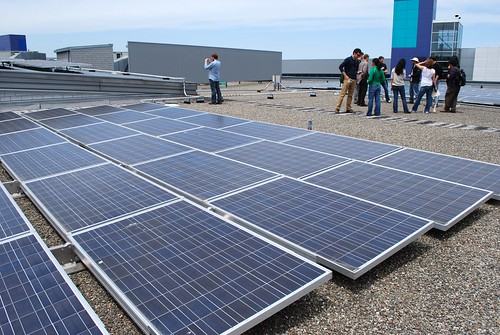
This past week I got a chance to take an up-close look at the solar panels up on the roof at work. My building doesn’t actually have solar panels yet, but many of the main campus buildings and carports do. I grabbed one of the campus bikes and headed over to meet up with the green committee and take a quick tour. Since I’m writing about my place of employment, the standard disclaimer applies.

Tour of the solar panels at Google

At the time the panels were installed, it was the largest corporate PV project in the country. Coming from Ohio to a sunny state like California, it’s a little surprising that Google’s 1.6MW project in 2007 was so groundbreaking. I think part of the problem has been that it takes a few years to see the return on the investment, and for the past decade or so everyone’s been so caught up in the short term. The company expected it would take 7.5 years for the system to pay for itself, but given the way utilities charge for peak load I hear we’re even ahead of that mark.

Here are a few closer shots of the panels:

Continue reading